With a recession, unemployment, underemployment, and the like, it is hard to get exercise or go have fun when you are on a budget. But even in good times, you shouldn't be spending a bunch of money on high cost activities. The answer is low cost leisure. These activities promise maximum rewards dirt cheap.
 1. Running
People think getting in shape requires buying a bunch of shit, becoming a triathlete with $5K worth of gear, joining some expensive gym with a locked in two year contract, or other such horseshit. But to get in phenomenal shape, all you need is a decent pair of shoes. This will cost you about $80. Running attire will cost you another $100. That's it. You go out and run. You can do it in the morning or evening. No one is going to charge your bank account for it. You don't have to find storage space for a bunch of gear. Your gym is always open. And the results are phenomenal. You will lose weight and have improved stamina and fitness. Throw in some push ups and crunches after your run for a total body workout. Plus, if you get bored with running, you can change the scenery. You can hit the trails, run in a park, or defy death by running through gang territory. Running is really cheap. When you see the weekend warriors with their kayaks and mountain bikes on their roof racks, it is neat to realize that all your gear for your sport fits on the backseat of your car. It is also your dirty little secret. People will wonder how you stay so fit with no gym or equipment.
 2. Reading
People like to buy a lot of gadgets--big screen TVs, game consoles, iPads, and the like. Naturally, these gadgets also charge for content. And most of it sucks. You have crappy TV shows, crappy games, crappy movies, etc. But the best entertainment you can get comes from reading. Everyone knows the book is better than the movie. And the cost? Free. You can read free books online, check them out free from the public library, buy them used from thrift stores, or curl up at a Barnes and Noble and read it for free off the shelf. Or you can buy the books like I do. This can get expensive, but only if you choose to let it be expensive. Otherwise, you can read for free forever. They publish more books per year than you could ever read in a lifetime. I recommend picking a novelist like Agatha Christie or Ian Fleming and just reading their works all the way through. Finish one author and pick up with another. I have a vast reading list of books which grows faster than I will ever get to them.
 3. Chess
Chess is super cheap. You can buy a board and a clock for less than a hundred dollars which is an investment that will last for years. You can play forever. Chess is virtually infinite. It is the most challenging game devised by humanity. You can also play 24-7 thanks to the internet. Or, if you are just a beginner, there are free chess downloads where you can play against the computer. Other games such as billiards, bowling, and golf cost money. You have to pay to play every time. Not with chess. And if you become a grandmaster, this is quite an accomplishment. Plus, unlike poker, you don't lose anything. It improves your concentration, and it is very addictive for those who get into it. Yet, you would be hard pressed to spend more than $500 in a lifetime on this activity. For those not inclined in chess, there are other games like checkers, Scrabble, or what have you with similar financial characteristics.
 4. Writing
Creative types like to make things. They like to draw and paint and sculpt or make music or what have you. But all of these activities require equipment, supplies, and materials. The cost can quickly add up. Yet, writing is infinitely creative and costs nothing more than a pencil and a piece of paper. As someone who writes, I can tell you that I have enjoyed this activity for hours, and I have yet to exhaust the projects I am working on. Plus, it is damn cheap. I recommend a pencil, a notebook, and a coffee maker. Just sit down and write. Begin with a journal and write down all the things that happen to you or think about. Write poems, plays, novels, essays, etc. If you write daily like in a diary, it will amaze you how addictive the practice can be. Plus, you can do it anywhere. Even J.K. Rowling living on welfare was able to pen that first Harry Potter book. Now, as a very rich woman, her writing doesn't cost anymore now than it did then.
 5. Parks and trails
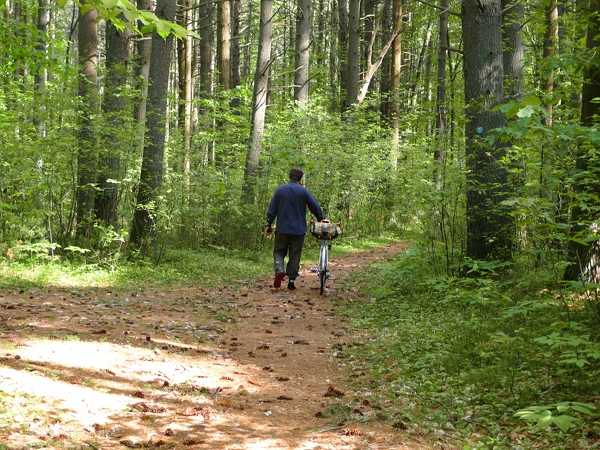
If you've got kids, keeping them entertained can be a real chore and very expensive. Families often opt to take their kids to pricey amusement parks or the lake or the beach. But I have found that kids have as much fun playing at a city park or traipsing on trails in a state park. These are almost always free or at minimal cost such as $2. Find yourself a place to sit and read or get in a run or what have you. The kids will play until the point of absolute exhaustion. Just be sure to bring water and sandwiches.
You can do a lot on just a little. These 5 activities are virtually inexhaustible and cost almost nothing. Yet, people tend to activities that cost a lot of money, but they are seldom as rewarding as these low cost activities. Running will get you into better shape than mountain biking. Reading is better than watching some high budget movie. Video games are quickly beaten but not chess. Writing is more fun than trying to learn guitar. You spend more time waiting in line at amusement parks than you do playing. But the high dollar activities are more popular because companies sell you on them to make money for themselves. Since there isn't much money in low cost leisure, there is no marketing to go with it. But smart people are immune to marketing. Dumb people are not. This is why dumb people are broke and bored.
 Sluggish World Cup ticket sales (about half a million tix are still available) and fewer projected foreign visitors than originally expected (200,000 versus 750,000) will result in a less-than-rosy picture for the organizing committee's bottom line. Combined with the $4.33 billion spent on preparations for the month-long tournament, it will not be surprising if there are some unhappy repercussions on South Africa's economic horizon. Tickets are finally being sold over the counter in the host country, but even the cheapest tickets at around $20 are out of reach for the many South Africans who live in abject poverty. Thus, South Africa's predicament raises the age-old question yet again: whether a country with severe economic and social challenges should bid for the honor -- and back-breaking financial burden -- of hosting such global events. Your thoughts?