Showing posts with label Cape Cod. Show all posts

Wednesday, December 26, 2012

'Tis the Off-Season

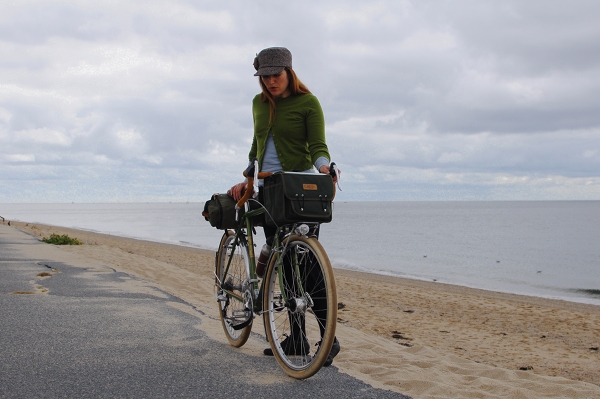
Seaside Bicycles
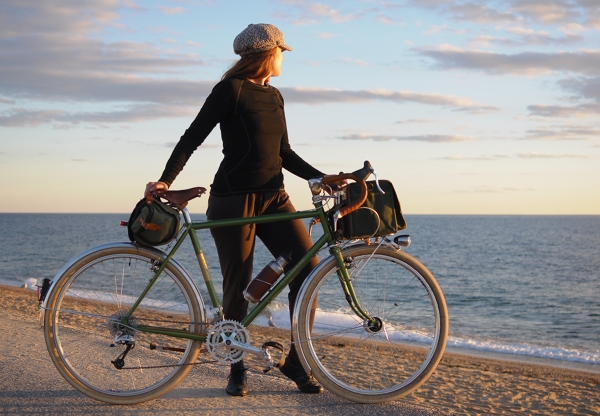
The holiday rush of the city really got to us this year, and we wanted to be some place quiet. So for the days leading up to Christmas, we stayed on Cape Cod. 

And quiet it was. Turns out Provincetown has chosen this winter to repave its roads and fix its sidewalks, so basically the whole town was dug up and closed to motorised traffic. 

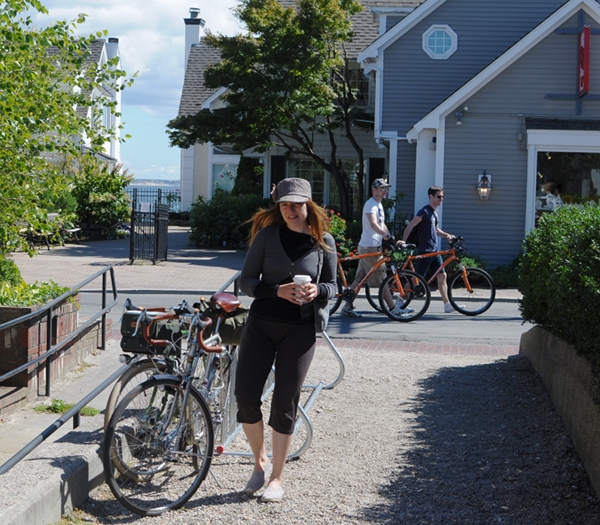
But despite the roadwork, many of the businesses remained open, catering to locals and to the occasional visitor. The result was the sort of insular pedestrian small-town atmosphere that has long ceased to exist under normal circumstances. People said hello to each other on the streets. The phrase "How are you?" was interpreted as a question, rather than a greeting, and detailed answers were given. Merely seeing each other walking, or cycling around the town center had created a sense of relaxed familiarity among everyone present, however temporary. 

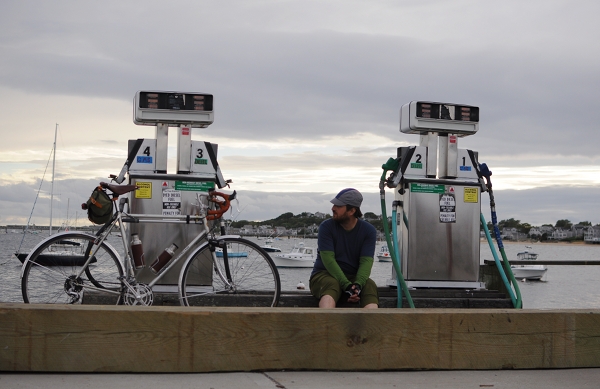
Men on Bikes
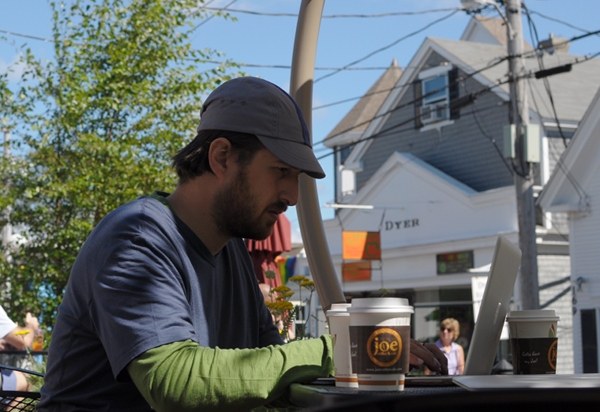
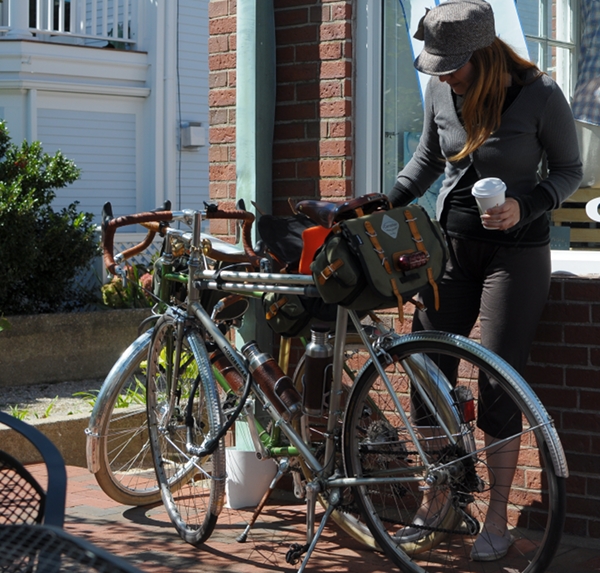
Even in the busiest, most hectic part of summer, what I like about Provincetown is how relaxed and unaggressive it is. Bikes, pedestrians, cars. Tourists, summer people, locals. Gay, straight, undefined. Somehow, all of these categories are simply combined, without being pitted against each other. They are separated by "and" and not "versus." It's a microcosm that does not reflect the reality of life elsewhere. But at least it shows that, in theory, it's possible for people to function like this. And in the off season, with everyone squeezed into the same couple of bars and coffee shops after hours, this became all the more apparent. 

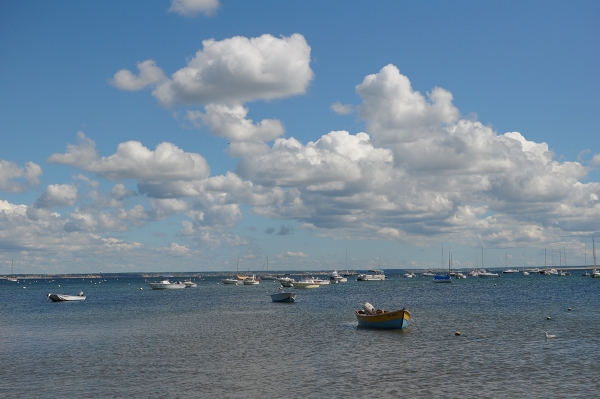
Provincetown Off-Season
Last year I mentioned noticing more incidents of aggressive and inattentive drivers over the winter holidays in Boston, and this time around it seems even worse. First it was the rush of last minute Christmas shopping. Now I guess it's the post-Christmas sales. Soon it will be New Year parties. Whatever it is, drivers on the roads just seem so impatient and angry right now. Sure, they might arrive to their holiday parties smiling, saying all the requisite niceties and exchanging beautifully wrapped gifts. But what's the point, if for entire weeks leading up to this they are filled with such stress, that rage is boiling just beneath the surface? I couldn't even feel annoyed at the woman who laid on her horn and shouted when I took too long making a left turn the other day. Obviously something other than me on my bike must have been the real cause of her anger. So I try to be extra cautious on the roads. And I try to not fall into the stress trap myself. No big plans. No pressure. No stress. That's my plan into the New Year.
Wednesday, September 29, 2010

Fog Lights

Have you ever cycled in a dense fog?

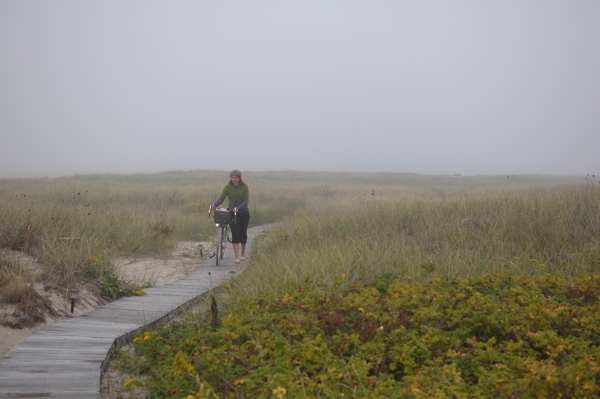
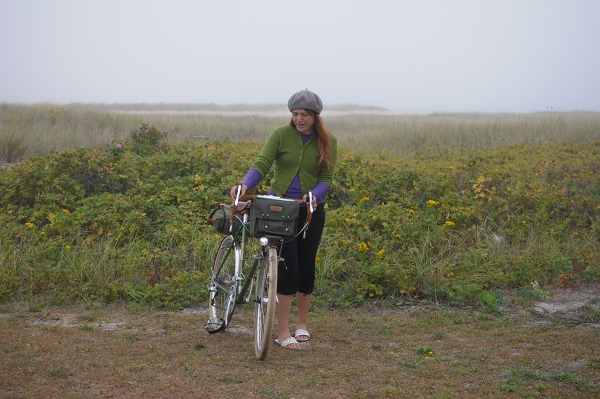
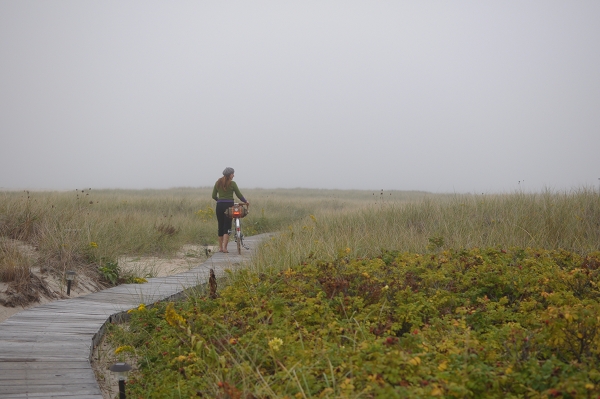
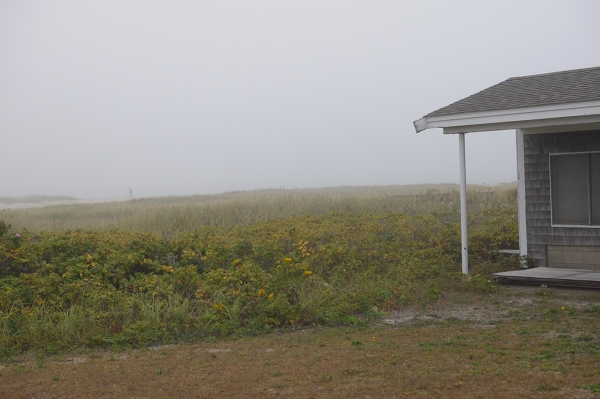
For the past couple of days, we have been surrounded by this stunning, surreal landscape. There is no distinction between sky and ocean. The dunes, grasses and rosehip bushes are wrapped in a milky whiteness. There is a tornado warning in effect, but for now everything is eerily calm.

To watch someone approaching through the fog from a distance has always fascinated me.  It looks as if the person is coming from nowhere, or from the sky.

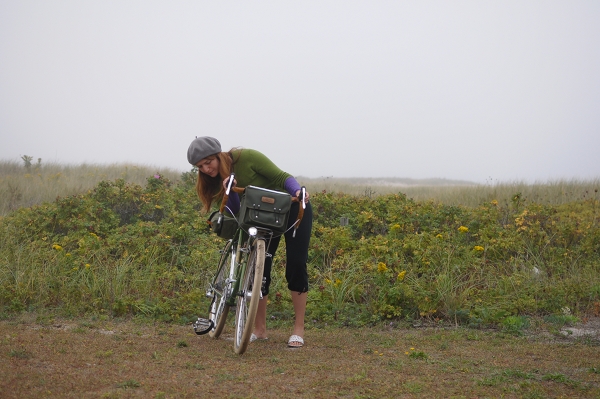
I took the opportunity to see how Graham's lights would perform in these conditions, and they were fairly well visible - even at slow speeds.

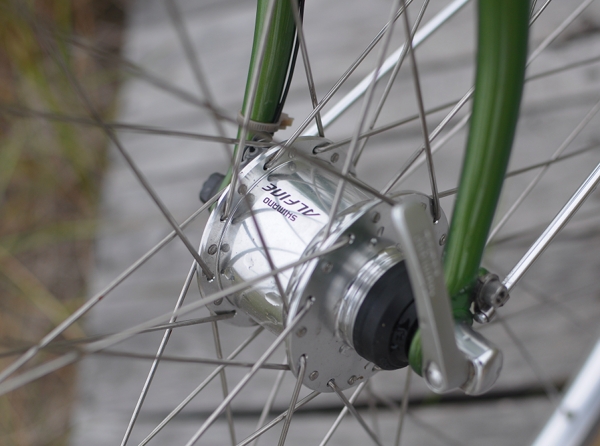
The lights on my Rivendell Sam Hillborne are powered by a Shimano Alfine hub.

The headlight is a Busch & Müller Lumotec IQ LED Cyo Senso Plus, and its performance is stunning. The beam is not just powerful, but surprisingly large - so that cycling in the dark feels as if there is always a street light on. There is a standlight feature (the light remains on for a few minutes after the bicycle stops), as well as a "senso" feature, whereby the light turns itself on and off depending on how dark it is.

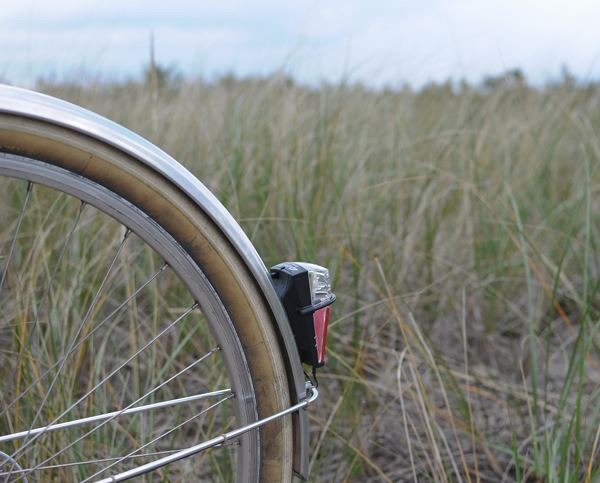
The tail light is a Busch & Müller 4D-lite Plus, which has classic looks, 4 LEDs, and the same standlight feature as the headlight (though the Co-Habitant thinks the standlight on this one is not sufficiently bright).

An additional feature of this tail light is that it is surrounded by a metal cage, which prevents the light from being damaged when it is bumped. This is very useful when the bicycle is dragged through doors and left at bike racks.

I am confident that others can see me in the fog with the light set-up I have on this bicycle. Seeing the road, however, is another matter. What do randonneurs do in these situations? I cannot imagine that any bicycle light can really be strong enough to act as a true fog light in the daytime.

Monday, September 27, 2010

Do You Cycle When You're Sick?

Just to make sure that nobody would be envious of my stay on Cape Cod, I went and got sick last week. While normal people catch cold, get over it, and go on with their lives, for me illness tends to be "epic". So lately my world has consisted of watching the ocean wistfully while bundled up on the porch, drinking endless hot fluids and medications, working on my laptop, and very minimal cycling to town and back. My bicycle looks at me with scorn, as if to say "How could you!" Which brings me to the question: Do you cycle when you are sick?

Previously I would have answered "yes", but staying here makes me realise that it partly depends on the bike as well. I have a relatively easy time riding an upright bicycle slowly while feeling unwell, but am finding it almost impossible to ride a roadbike in that state. Not only is the speed more than my lungs can handle, but I also have trouble with balance and coordination. On my upright bikes this is not an issue, since their position is almost identical to sitting in a chair and the loop frame is easy to mount and dismount. I am starting to really miss my Gazelle - imagining her, in my hallucinatory state, as a Dutch nurse feeding me spoonfuls of medicine and wrapping me in folksy-patterned quilts.

Monday, September 20, 2010

Mobile Home

It can be said that one reason people enjoy commuting or traveling in a car, is that the car functions as an extension of their home while they are away at work or on the road. They keep a myriad of personal belongings in the car - from food and drinks, to changes of clothing and footwear, to reading material and selections from their music collection. Those who have children or pets often have toys and other objects associated with them scattered in the back. And then of course there are the familiar smells: Whether good or bad, the interior of a car takes on a distinct scent associated with its owners' activities and lifestyle. In essence, the car really does attain aspects of the driver's home over time, and this undoubtedly contributes to the emotional attachment many feel toward their vehicles. The Co-Habitant's dayjob involves extremely long shifts (12 hours is typical), and his colleagues routinely nip out to the car during breaks to retrieve various items and drop other items off. To do so is comforting when away from home for so long. This is also why the Co-Habitant equipped his Pashley with both a saddlebag and handlebar bag, despite a relatively short commute: It was important to create a similar "homey" environment for his bicycle.

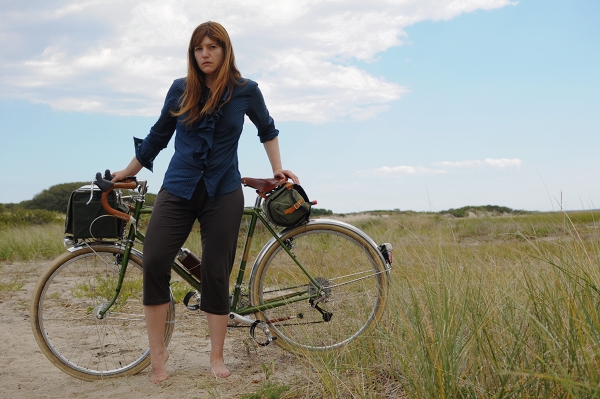
In my earlier post about handlebar bags, I mentioned the appeal of the idea that the bicycle can be turned into a mobile home - ready to go anywhere while still allowing the cyclist to feel as if their life is coming with them, rather than being abandoned. Now that I have installed a handlebar bag on my own bicycle and have found myself in a situation where turning said bicycle into a mobile home is necessary, I truly understand what this feeling is like. While on Cape Cod, we are typically away from home from morning till late evening - during which time we work, go on rides, and do various things in town. All of those activities require different items to be taken along, including clothing, equipment and food. At this time of the year, there are also significant fluctuations in temperature in the course of the day (mid 40s- upper 80s) which must be taken into consideration. To my delight, the combination of a roomy handlebar bag and saddlebag can accommodate all of these concerns.

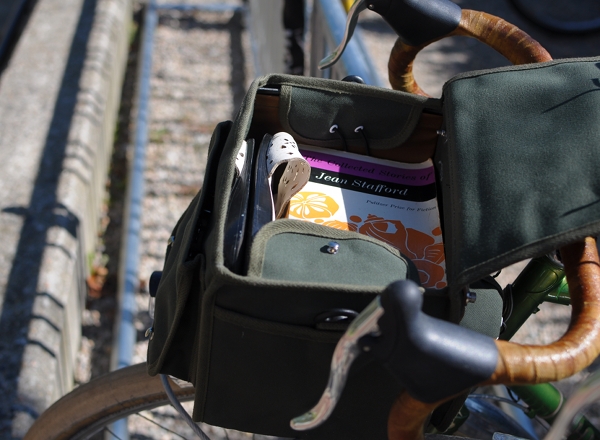
Typical contents of my handlebar bag: sweater, down vest, 2 extra hats, waterproof jacket, costume for photo shoot, props for photo shoot, make-up, shawl to use in leu of beach blanket, swim suit, flip-flops, extra pair of socks, 2 books, notebook, pen case with 2 pens, bar of chocolate, gloves, sunscreen, deodorant, DZNuts, saddle cover, money and ID. Notice that the bag is not even full.

Typical contents of my saddle bag (now converted into a camera bag) are our photo equipment: This time, a digital SLR, a Medium Format film camera, 10 rolls of film, and, just for fun, a toy camera.  We have a second Medium Format film camera that could also fit instead of the toy one.

The Co-Habitant carries his own clothing, our tool kit and medical kit, and both of our laptops. He only has a single saddlebag on his roadbike, so the laptops he transports in a messenger-style bag on his person - which is the one glaring imperfection in our set-up. Next time we take a trip like this, he will have some sort of handlebar + saddlebag set-up as well, where the handlebar bag is smaller than mine, but the saddlebag is larger - the type that can fit laptops and will require a rear rack. I think that both the larger Rivendell and the Ostrich saddlebags will fit this purpose, but any other suggestions for future are welcome.

Of course, turning my otherwise light Rivendell into a "mobile home" has made it nearly as heavy as a typical Roadster - but the bike seems to handle no differently as a result. The longer I own this bicycle, the more I love it - which brings a new shade of meaning to "home is where the heart is".

Saturday, September 18, 2010

Salvaging Style with Hats, Scarves and Argyle

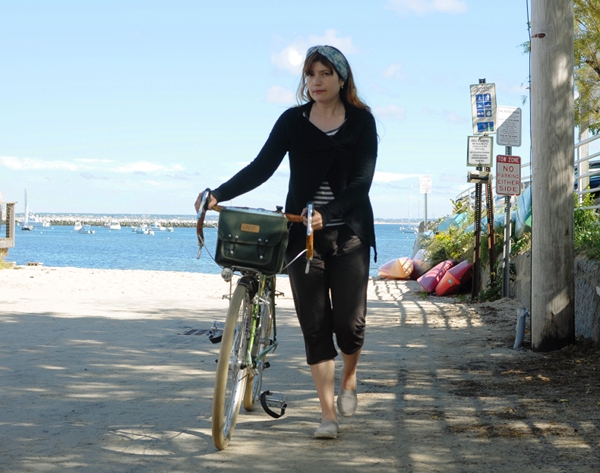
Spending what seems like all day trekking back and forth over hills, then dragging our loaded bikes to photoshoot locations across dunes and marshes... frankly I have abandoned all hope of appearing fresh or presentable.  Cycling-condusive clothing and tangled, sweaty hair hidden under caps are the new me for the time being.

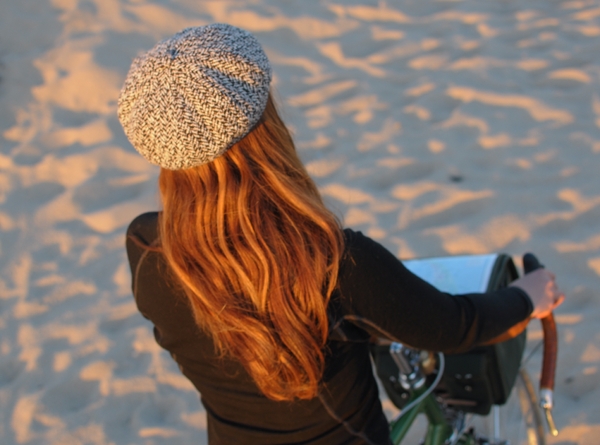
Well, at least the hats themselves can be nice. I have many, and am often asked where I get them. The sources are usually a mix of unidentifiable small shops, and uninspired places like Target and Urban Outfitters. This one is actually from the Army-Navy store in Provincetown, bought a few years back. It is a heavy wool "newspaper boy" type hat that, surprisingly, can be worn even in hot weather.

I have also finally mastered the art of tying a scarf around my disobedient hair, thanks to this post on Knitting Lemonade.  

This is the first scarf-tying method that has worked for me so far - staying put all day, rather than sliding back off my head when I least expect it.

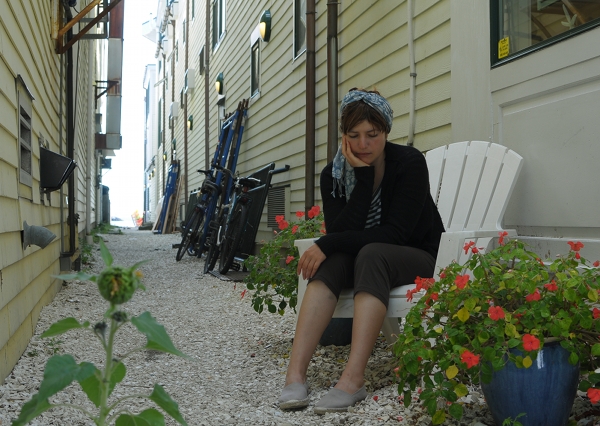
Thanks to the headscarf, my gaunt exhaustion is semi-disguised as glamorous fatigue. The blue fabric also matches the bruises on my legs rather nicely.

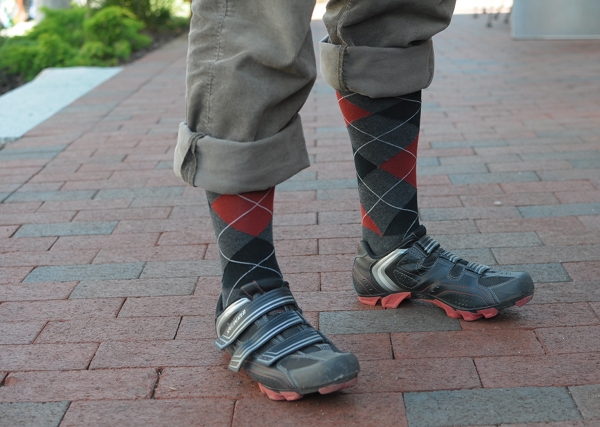
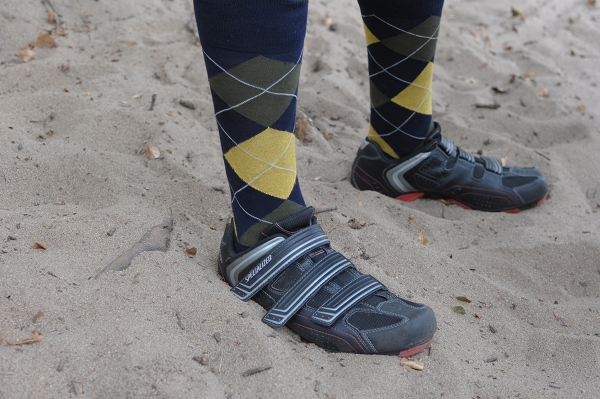
As for the Co-Habitant, he chooses to express himself with socks. 

Here is another pair. Yes, argyle socks and SPD cycling shoes. Sure, things can get silly. But what better way to sweeten a long ride? 

Thursday, September 16, 2010

Car Free, Skirt Free and Exhausted!

For the remainder of September, we are staying on Cape Cod - and this year's experience is both a joy and a challenge, since we are getting around exclusively on our bicycles.

We are staying on the edge of Provincetown, about 2 miles from the town center. Two scenic, but hilly miles. The town bordering Provincetown is Truro - which is not really a town at all, but a long stretch of dunes, salt water marshes and beach-front properties. The next closest thing to an actual town is Wellfleet - and that's 15 miles away. Fifteen very hilly miles.

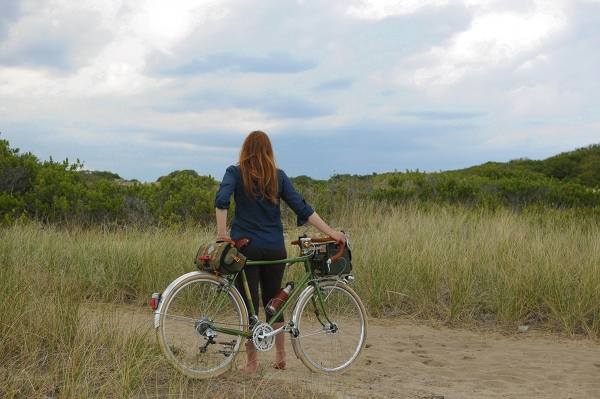
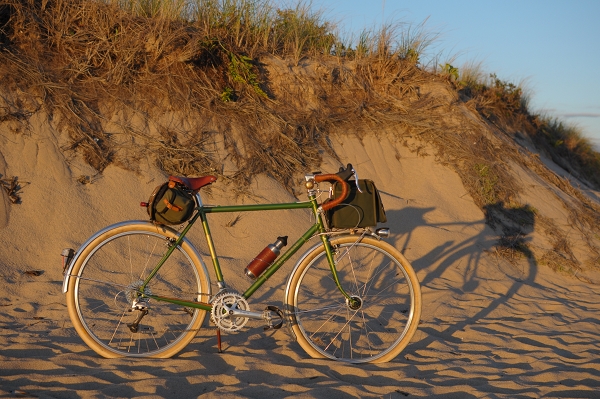
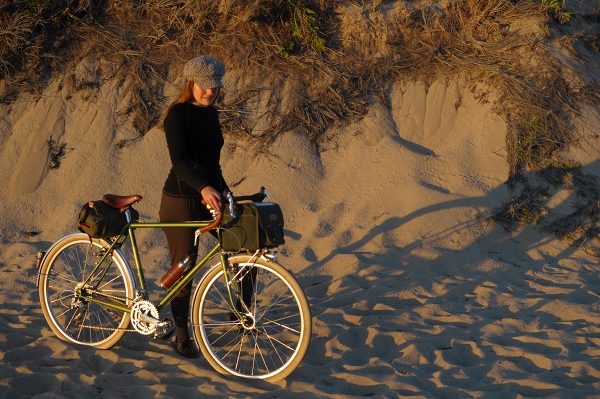
Needless to say, I am pleased with the bicycle I ultimately chose to take to the Cape: "Graham Greene," my Rivendell Sam Hillborne. Though not optimal for cruising through the center of Provincetown itself, it is indispensable for pretty much any other kind of cycling we do here - from transportational cycling to any destination on the Outer Cape (as the tip of the Cape Cod peninsula is known), to the series of long rides we have planned in our free time. I remembered this area being hilly from the time we stayed here with our bikes last summer, but I convinced myself that I was exaggerating. But now it is clear that my memory had not been exaggerating at all: It is darn hilly here;  hilly with a capital "H"!

Although last summer we rode our bicycles on the Cape frequently, they were not our exclusive means of transportation: we simply weren't in good enough shape to handle it. However, this summer it is bikes only - and even now our physical abilities are being challenged.

Every morning begins with our cycling into Provincetown for breakfast, work, and various errands.

Our bicycle bags are packed with everything we might need for the day, including camera equipment (thanks to the Zimbale camera insert I recently received - and stuffed perversely into my Carradice saddlebag) and several changes of clothing to accommodate changing weather conditions and different activities.  After that, we go about our day, cycling from one place to another and covering at least 15-20 miles purely as back-and-forth transportation. 15-20 very hilly miles, in case I failed to mention that!

On several occasions, we have had the opportunity to take long rides: We have gone on two 30 mile rides and one 60 mile ride so far (more on that later!). The goal is to do a century (100 mile ride) during our stay here.

For me, the weirdest aspect of riding a roadbike exclusively, is my resulting skirt-free wardrobe. But for a few weeks, I can live with it. Ultimately, my stay here will serve as a test of how well I can manage in a rural, hilly, isolated environment... with only my bike to rely on. While for some, a remote oceanfront location is associated with "Vacation", for me it is associated with "Home" and I miss it terribly. I am finding it increasingly difficult to cope with living in the city, even an interesting one like Boston.  Something has to change - including my own endurance, if I am serious about living someplace like here and I want to continue cycling. I won't deny that I am utterly exhausted from the time I've spent here on my bike. But I am also excited by the mere fact that I have been able to do it so far. Wish me luck!
Amusingly, though there is no overhead light at our place, there is internet reception. Lovely Bicycle will continue as always, scribbled by candle light.

Friday, September 10, 2010

What Is a Girl to Ride?

Starting this weekend, we will be staying on Cape Cod for a bit, like last summer. It is not a vacation in the classic sense since we will still be working, but it will be a welcome change of scenery - and of course there will be time to cycle.

It was only decided for certain that we will go last night, and now I have a day to get ready. While for many women, I imagine the most pressing question would be what clothing to pack, for me that is pretty much settled. Our photo equipment and props are also ready to go. But what is a girl to ride? Now, that is another matter!

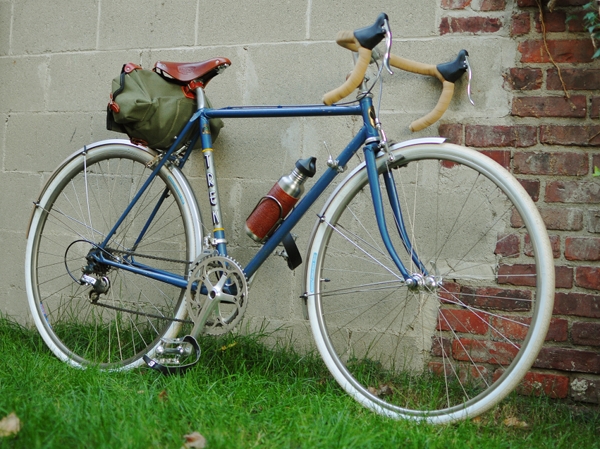
I could take Graham.  Pros: He can handle the hilly, long distance rides we plan and has an excellent lighting system for those pitch-black country roads.  Cons: A roadbike is not the best idea for in-town cycling (we are staying in Provincetown), plus I would be so nervous to leave him locked up at a bike rack!

I could take the brand new (yet unnamed) mixte. Pros: I can ride her both in the town and in the country, and I know she is comfortable.  Cons: We have not installed the lights yet, and are waiting for a part that may or may not arrive today. And I would be just as nervous to leave her locked up in town as the Rivendell.

Or, I could take Seymour Blueskies. Pros: He would be fast on those hilly roads, and I would not worry about leaving him locked up on a bike rack in town.  Cons: he does not have dynamo lighting, is not quite as comfortable as the other two options on super-long rides, and, as a roadbike would not be ideal for in-town cycling.

Taking one of the vintage 3-speeds is out of the question, because they would not be able to handle the substantial hills of the outer Cape, so the three bikes above are my options. Since this will be home away from home for a while, ideally I would have two bikes: one for in-town and another for long-distance hilly rides - but that is not realistic. Whichever I take, adapting to a one-bike lifestyle for a bit should be interesting!

Saturday, October 31, 2009

Friendly Witches and Scenic Graveyards

Was I a good witch or a bad witch for Halloween? Only Eustacia knows, and she is not talking. I rolled through the night with reflective sidewalls and plenty of lights on my bicycle, and I think only good witches do that. Bad ones tend to hide under the cover of darkness.

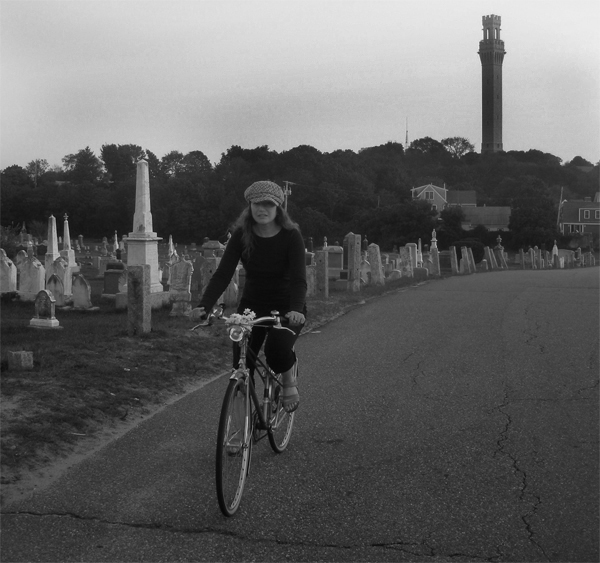
On this ghoulish night, I present you also with this photo of me and Marianne cycling through Provincetown Cemetery at dusk. I spent part of my childhood in a small New England town, where we lived down the street from a very old graveyard. Its presence seemed entirely normal; my friends and I would even take walks there after dark. Only later did I discover that graveyards freaked other people out. That and old Victorian houses with floorboards that creak even when no one is walking on them. Go figure!

Thursday, October 8, 2009

Sand Trails Meet Road Tires

I know that some people are afraid to venture off road on road tires, but you might be surprised how versatile a good road tire can be.

We were cycling along the coast in Wellfleet, Mass., when we came upon this spectacular fire road.

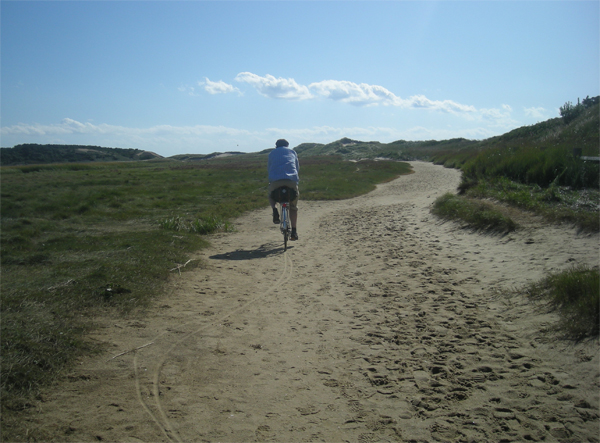
The sand road, which is no more than a narrow trail in some stretches, runs trough several miles of dunes and saltwater marshes. You can see the depth of the sand here by the tire tracks on the left and the foot prints on the right.

There were no other cyclists on the trail and at first we did not think that our bicycles could handle it, but apparently they could. We rode at a slow and even pace without incident, enjoying the gorgeous views that were inaccessible from the road.

We both have 32mm tires on our Motobecanes: mine are Panaracer Pasela Tourguards and his are Continental Ultra GatorSkins. Both of these have good kevlar protection and are pretty fast on the road. Great to know that they perform off road as well. The above photo gives a pretty good sense of the depth of the sand we were able to cycle through. If you have never encountered sand on a bicycle before, the thing to keep in mind is that you should avoid making sudden or sharp turns. If you need to turn, make it a very wide turn and do it smoothly and gradually.

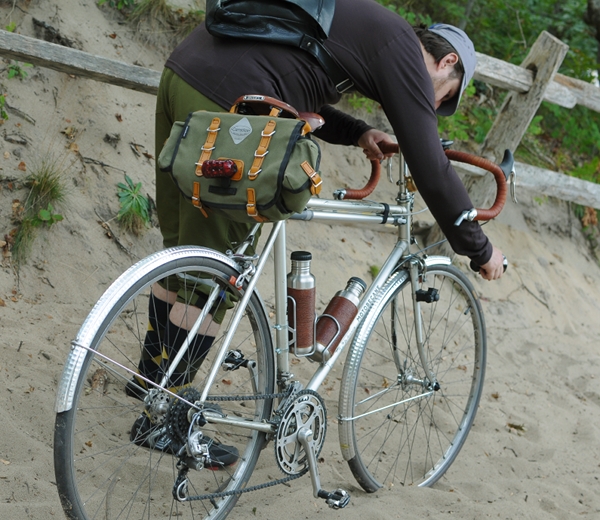
Here is a deeper pile of sand where we had to stop and walk the bikes (or in my case, push the bike forward with my feet). There were a couple of these patches, but not many.

As the trail wound closer to the water's edge, the sand became increasingly wet and covered in shards of sea shells.

Here is a close-up. We rode through that too.

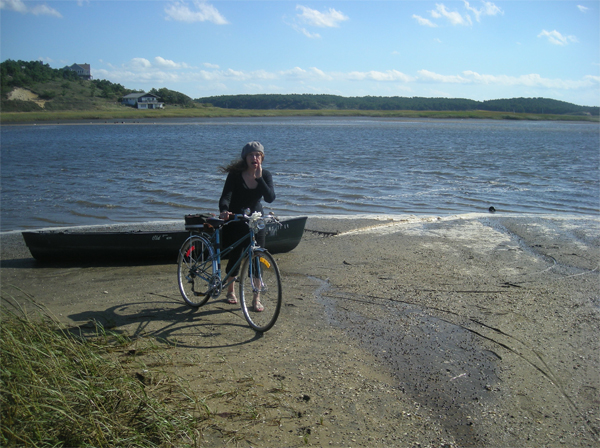
I was worried that the sea shell shards might puncture our tires, and here I am yelling something to that effect. But in the end we decided to go through with it, and que sera sera.

The tires emerged filthy, but intact.

Cycling through the sand felt wonderful, especially since it gave us access to places that would otherwise have gone unexplored. One does not necessarily need a mountain bike just to go on some fire trails, even if they involve dunes and marshes. Invest in good tires with kevlar protection and don't underestimate your roadbike!